What Should You Do When a Lesson Completely Falls Flat?

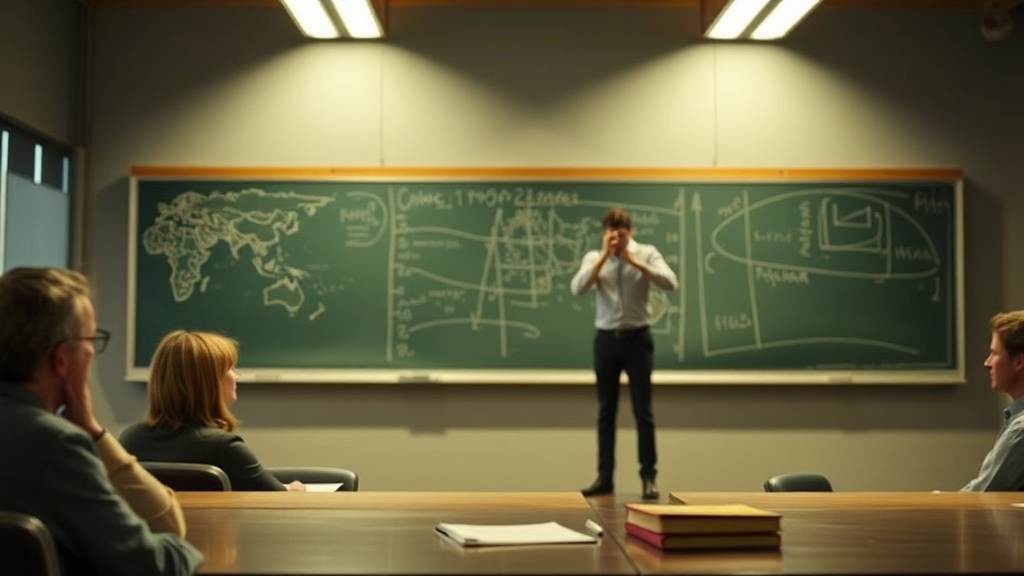
Why does a lesson that looked perfect on paper sometimes tank the moment you're standing in front of twenty-five blank stares? Every teacher—whether it's your first year or your fifteenth—has experienced that sinking feeling when an activity you spent hours preparing lands with a thud. The group discussion fizzles. The hands-on demonstration confuses more than clarifies. The technology refuses to cooperate. Suddenly you're watching the clock, wondering how to salvage the remaining thirty minutes.
This isn't about catastrophic failures (though those happen too). It's about the everyday misfires—the lesson plans that don't spark engagement, the explanations that leave students more puzzled than before, the activities that seemed interactive in theory but feel flat in practice. What separates good teachers from great ones isn't avoiding these moments entirely; it's knowing how to read the room, adapt on the fly, and turn a derailed lesson into a learning opportunity for everyone—including yourself.
How Can You Tell When a Lesson Is Going Off the Rails?
Recognition has to come before recovery. The earlier you spot trouble brewing, the more options you have for course correction.
Watch for the physical cues first. Students who were leaning forward are now slouching. Phones are creeping out of pockets. Side conversations are multiplying while your voice competes for attention. These aren't signs of bad students—they're signals that your delivery isn't landing.
Verbal cues matter too. When your questions meet silence (not the thoughtful kind), when students ask "Is this going to be on the test?" twenty minutes in, or when someone brave enough to speak up completely misses your point—these are diagnostic data. The lesson isn't connecting.
Here's where honest self-assessment helps. Is the pace wrong? Too much talking, not enough doing? Are you pitching the content too high or too low for this particular group? Sometimes the material is sound but the sequencing is off—you're asking students to apply concepts they haven't fully grasped yet.
Don't wait for the full crash. The moment you sense momentum slipping, you've got a decision window. Pushing through a failing lesson plan rarely works. Students can smell desperation, and they'll tune out further if they sense you're rigidly committed to something that isn't working.
What Immediate Moves Can Save a Lesson in Real Time?
Once you've diagnosed the problem, you've got roughly thirty seconds to pivot before you lose the room entirely. Here are recovery tactics that actually work in classrooms—not in theory.
Pause and reset. Literally stop talking. Let the silence sit there for a moment. Sometimes the break in momentum is enough to recapture attention. Then acknowledge what's happening: "This isn't landing the way I hoped. Let's try a different angle." Students respect honesty more than performance.
Switch modalities immediately. If you were lecturing, get them talking. If the group work is flopping, bring them back together. If the reading is too dense, summarize it verbally. Modalities aren't sacred—engagement is. Edutopia's research on engagement strategies shows that variety and movement dramatically improve information retention.
Ask them what they need. This sounds risky, but it works: "Where did I lose you? What would help this make sense?" Students often know exactly what's confusing them—they just haven't been asked. One specific question from a student can clarify where your explanation went wrong for everyone.
Drop the plan. Seriously. If the activity isn't working, abandon it. Pull up a relevant video. Tell a story that illustrates the concept. Have them write for three minutes about what they do understand. Teaching isn't about executing plans—it's about causing learning. The plan is just a tool.
Use the "parking lot." When confusion is widespread but you need to move forward, acknowledge the gap without getting stuck: "This is clearly murky—we're going to park this question and circle back tomorrow with a different approach." Then actually do circle back. Empty promises destroy trust faster than failed lessons.
How Do You Rebuild Momentum After a Rough Class?
The lesson ends. You feel deflated. Maybe you're replaying the awkward silences in your head or wondering if the students now think you're incompetent. This emotional residue matters—because how you process a failed lesson determines whether the next one succeeds.
First, do a quick post-mortem while the memory is fresh. Not a self-flagellation session—an honest analysis. What was the specific breakdown point? Was it preparation (you didn't anticipate a prerequisite knowledge gap)? Delivery (you talked too long)? Timing (wrong time of day, right after lunch, pre-holiday)? Environmental (tech failed, room was too hot, fire drill interrupted)?
Document what you learned. Keep a simple teaching log: date, topic, what happened, what you tried, what you'll change. Patterns emerge over time. You might notice your discussions consistently flop on Monday mornings, or that certain topics need scaffolding you haven't been providing.
Then—and this is important—let it go. A bad lesson doesn't make you a bad teacher. Obsessing over failures drains the energy you need for tomorrow's classes. ASCD's work on teacher resilience emphasizes that sustainable teaching requires separating your identity from any single lesson's performance.
Reconnect with your students next class. Don't grovel, don't overcompensate with bribery—just show up with something better. Students have short memories when it comes to teacher missteps. What they remember is whether you recovered with integrity.
How Can You Prevent Future Lesson Flops?
You can't eliminate failed lessons entirely—teaching is too human for that—but you can reduce their frequency and severity with some proactive moves.
Build in checkpoints. Don't wait until the end to assess understanding. Every ten to fifteen minutes, check: thumbs up/middle/down, quick write, turn-and-talk, one-question quiz. These micro-assessments tell you if you're on track while there's still time to adjust.
Prepare plan B and plan C. Before you walk into class, know what you'll cut if time runs short and what you'll add if the main activity finishes early. Have an alternative explanation ready for the concept that usually confuses students. The backup plan gives you confidence to take risks with plan A.
Know your students' starting points. The most common cause of lesson failure is the gap between what you assume they know and what they actually know. Brief pre-assessments, entry tickets, or simply asking "What do you already know about X?" can prevent you from building on a shaky foundation.
Collaborate before you isolate. When a lesson tanks, talk to a colleague. Research from the Teaching Channel demonstrates that teachers who regularly debrief with peers develop faster recovery skills and more effective lesson designs. Your department chair, instructional coach, or teaching partner has almost certainly had the same experience—and might have insights you haven't considered.
Study your wins too. We obsess over failures and breeze past successes. When a lesson works beautifully, analyze why. What was different? The time of day? The prior knowledge base? The energy you brought? Your seating arrangement? Understanding success is as valuable as dissecting failure.
Why Are Failed Lessons Actually Valuable?
Here's the counterintuitive truth: your worst lessons often produce your best teaching growth. The classes that hum along smoothly don't force you to question your assumptions or stretch your skills. It's the disasters—the ones where you had to improvise, apologize, or completely start over—that build your adaptability muscles.
Students learn something important when they watch you handle a setback with grace. They see that mistakes aren't fatal, that adults aren't infallible, that problems can be solved with creativity and humility. You're modeling the very resilience you want them to develop.
Every experienced teacher has a portfolio of "lesson disaster" stories. The chemistry demo that set off the fire alarm. The discussion question that sparked an unexpected and uncomfortable argument. The technology fail that turned into an unexpected breakthrough. These stories become part of your teaching identity—not because the failures defined you, but because you survived them and grew.
So the next time you feel that familiar dread creeping in—the realization that your carefully constructed lesson is falling apart—take a breath. You've been here before. You'll be here again. And each time, you're becoming a more responsive, more human, more effective educator. The lesson that falls flat today might be the foundation of your best teaching tomorrow.